
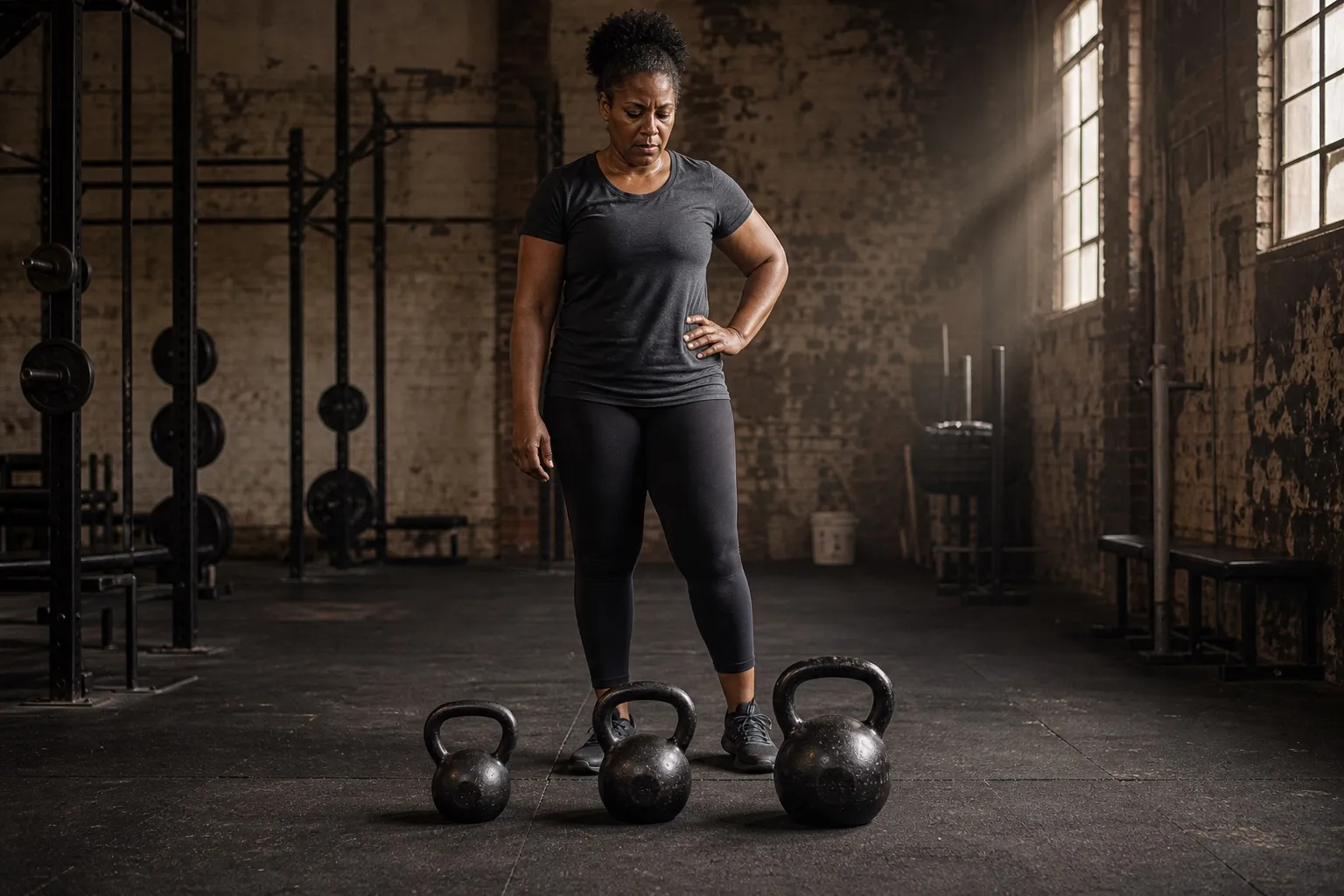
You need fewer kettlebells than a full rack suggests.
One well-chosen bell is enough to begin and can remain useful for years. Two different weights solve the biggest compromise in one-bell training: your hips can usually handle more load than one arm can press. Three weights give most home trainees a practical light, medium, and heavy range. A matched pair is useful only when double-bell training is part of the plan.
That is the short answer. The exact number depends on the jobs each bell performs, not on completing a neat sequence of weights.
One bell is enough when it fits your main work
A single kettlebell can cover swings, deadlifts, squats, rows, carries, floor presses, and some overhead work. It will not be equally challenging for all of them, but every tool in a small home gym involves compromises.
Stay with one bell while you can still progress by changing ordinary training variables:
- add a repetition or a set;
- improve range of motion or control;
- shorten rest slightly while preserving the work;
- use one side at a time for rows, carries, or squats; or
- choose a harder variation that you already perform safely.
The bell is still doing its job if those changes support your goal. A purchase becomes reasonable when the load repeatedly blocks a movement or leaves another movement with nowhere useful to go.
If you are still choosing your first weight, use the beginner sizing guide before deciding how many to buy. Three poorly chosen bells are not more useful than one appropriate one.
Two bells solve the largest load gap
For many people, the most useful collection is not a pair. It is two different weights.
The lighter bell handles movements with a smaller margin: overhead presses, get-up practice, warm-up sets, and technique work. The heavier bell handles two-hand swings, deadlifts, goblet squats, and carries. Rows and floor presses may fall somewhere between, depending on your strength and the size of the jump.
Imagine that you can press 12 kg with control but two-hand swings at that weight no longer provide useful work. Adding a 16 kg or 20 kg bell can expand the hinge and squat side of your training without taking away the 12 kg bell’s role. The numbers are examples, not a universal progression. Your two useful weights might be 8 and 12 kg, 16 and 24 kg, or two pound-marked bells with a smaller gap.
Choose the second bell by identifying the missing job:
| Repeated problem | More useful second bell |
|---|---|
| Current bell is too heavy for clean overhead work | A lighter bell |
| Swings and deadlifts have outgrown the current load | A heavier bell |
| Large weight jump disrupts otherwise solid technique | An intermediate weight |
| You want to train with two bells at once | A matching bell |
Do not assume the second bell must be heavier. A lighter weight can unlock more practice and more movement options than another challenge bell.
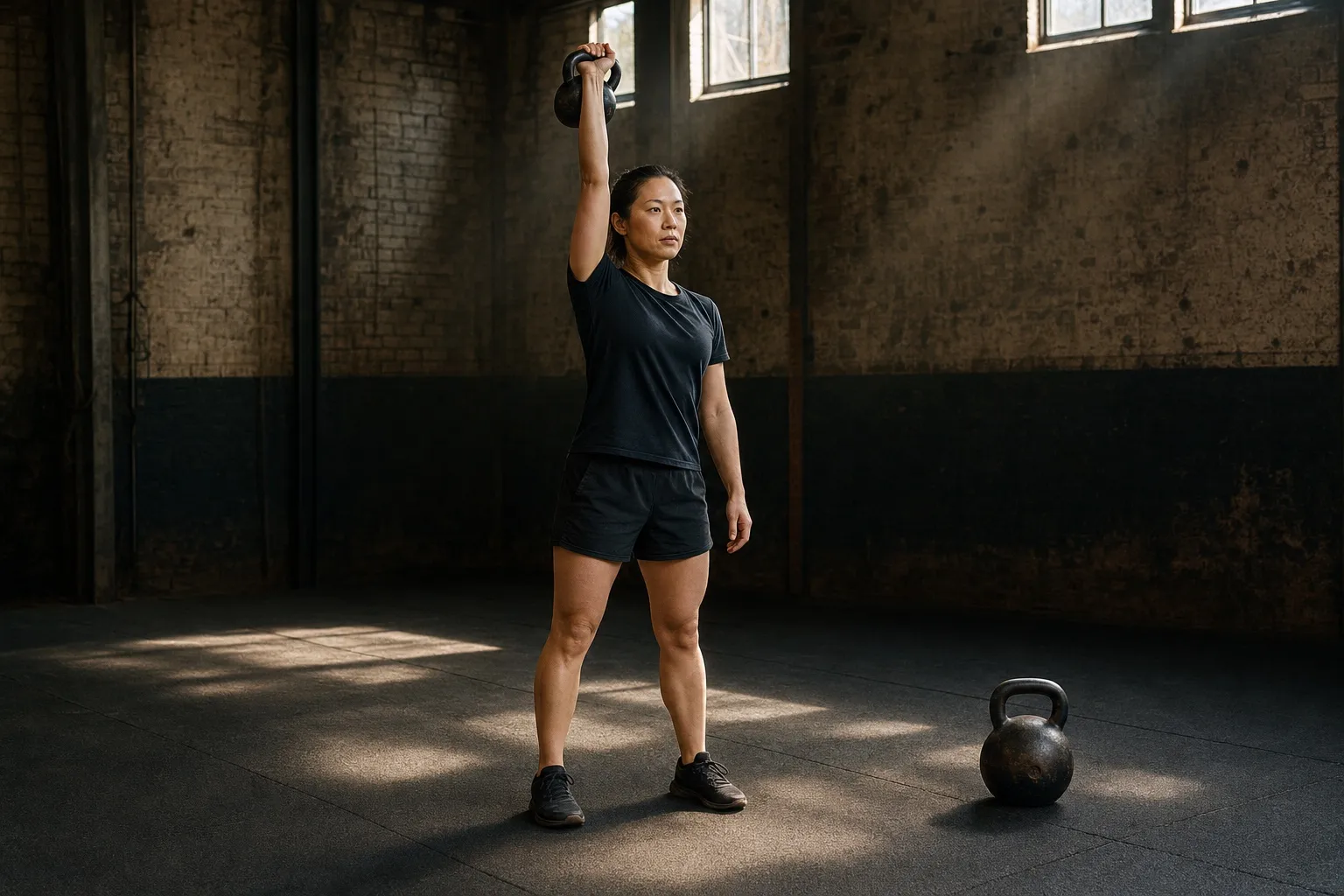
Three weights cover most home training
A light, medium, and heavy bell can cover a broad range without turning one wall into equipment storage.
- Light: technique practice, warm-up sets, overhead work, and movements where control is the limiting factor.
- Medium: general one-arm work, squats, rows, carries, and mixed sessions.
- Heavy: two-hand hinges, heavier squats, deadlifts, and short carries.
Those labels describe roles, not fixed numbers. One person’s heavy swing bell is another person’s light practice bell. A weight may also change roles over time. Today’s heavy bell can become next year’s medium bell without becoming obsolete.
Three bells are especially useful when the gap between your overhead strength and hinge strength is large. They also make small progressions possible: you can keep the heavier load for movements that are ready while using the intermediate bell where control still needs work.
Do not buy all three on your first day merely because the structure sounds complete. Start with the best current fit, train long enough to expose a real limitation, then fill that gap. Your collection should emerge from use.
A matched pair is a specific tool
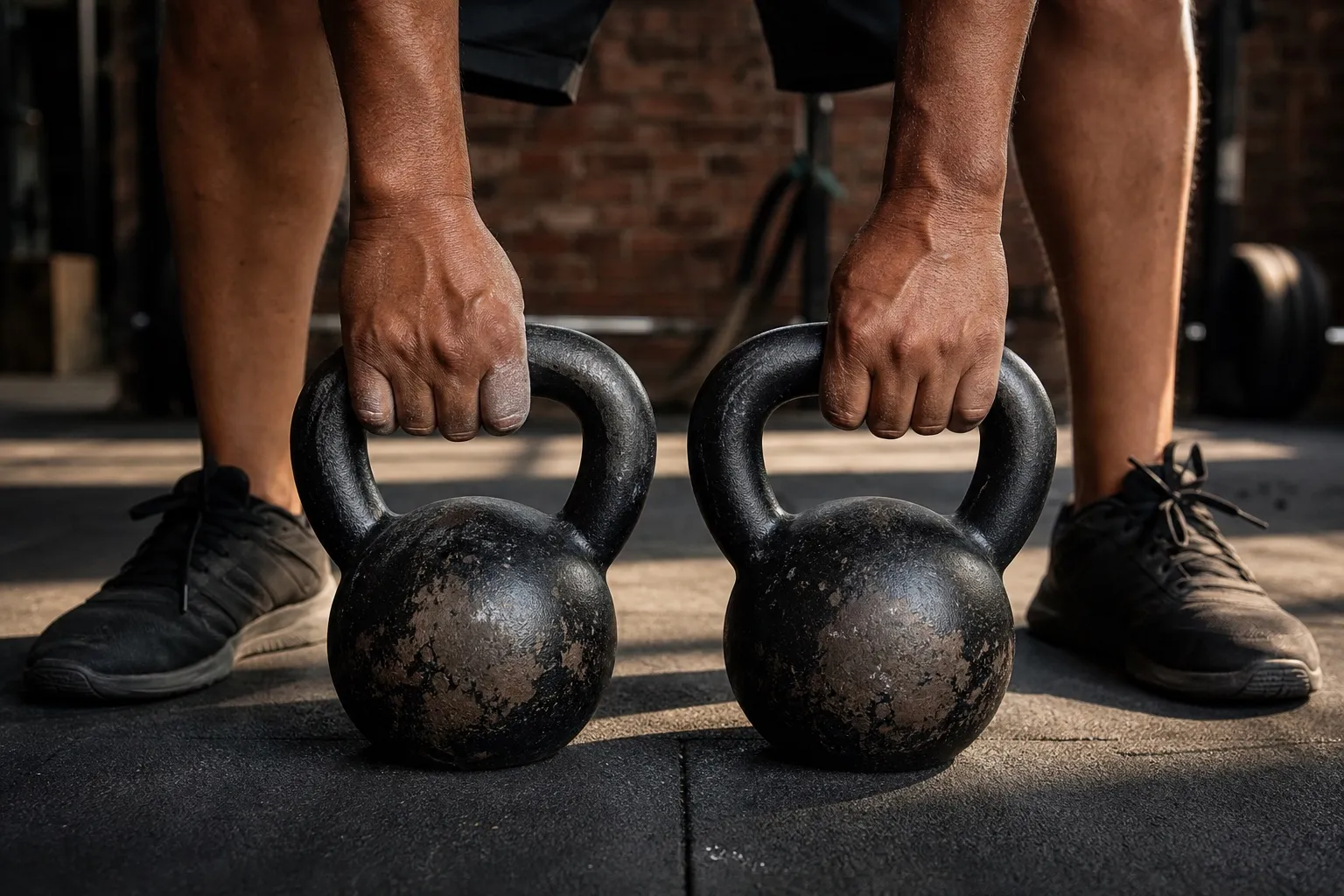
Two bells of the same weight let you load both sides at once for double front squats, double presses, double rows, carries, and linked sequences of movements. The total load rises quickly, and the two bodies demand more space in the rack and between the legs.
That can be valuable, but it is not the default next step. You do not need pairs for balanced training. Alternating one-arm work lets both sides train with one bell, and suitcase or front-rack carries can be performed one side at a time.
Buy a matched pair when all three statements are true:
- Double-bell work appears regularly in the program you intend to follow.
- You already know the chosen weight fits the relevant clean, rack, squat, and press positions.
- You have enough floor space to move and park both bells safely.
If you are unsure about the shape, the cast-iron and competition-style comparison explains why two equal-weight bells can still feel different. Matching dimensions and handles matter more in a pair than matching paint.
Adjustable kettlebells change the count
An adjustable kettlebell can replace several fixed weights when storage matters. It is particularly useful for controlled lifts where you want smaller jumps between presses, squats, and rows.
The tradeoffs are practical. Changing weight takes time, so an adjustable bell is less convenient when a session alternates quickly between light and heavy movements. Some designs also change balance or require tools as plates are added. Check the handle, locking mechanism, minimum and maximum load, and whether the bell can be set down normally at every configuration.
One adjustable bell still cannot act as two bells at the same moment. If double-bell training is the goal, you need two compatible adjustables or a fixed pair.
Buy the next capability, not the next number
Traditional kettlebell lines often rise in 4 kg steps, but you do not have to follow every step. Smaller jumps can make sense for overhead work. Larger gaps may be perfectly usable for two-hand hinges. Pound-marked bells and adjustable designs give you still more choices.
Before buying, review your last several sessions and answer four questions:
- Which movement is the current bell limiting?
- Is it limiting the load, the technique, or merely the variety?
- Could a change in repetitions, sets, rest, or exercise solve the problem?
- What exact work would the new bell perform next week?
If the fourth answer is vague, wait. A sale price does not create a training role.
The one-kettlebell home gym guide shows how much room you have before another purchase is necessary. When a second or third bell does earn a place, record the actual weight and the movements you use it for. Pood lets you register your own bells and log them in kilograms, pounds, or poods, so a mixed collection does not require mental conversions.
One bell starts the practice. Two weights solve most load conflicts. Three cover a wide range. A pair belongs to a plan that calls for a pair.