Kettlebell Training for Beginners
You do not need a wall of equipment to begin. You need a bell that fits your current strength, enough room to move it, and a plan you can repeat. These guides cover the buying decisions and setup details that make a small home training space work.
Start with what size kettlebell you should buy. It gives you practical ranges for hinge work, overhead work, and mixed training, plus a short test to use before you spend money.
Then learn what a pood is and how it shaped modern kettlebell sizes. The guide explains the old unit, the familiar 4 kg progression, and the difference between a rounded one-pood bell and an exact conversion.
Use the kettlebell weight conversion guide when a bell, store, or training plan uses a different unit. Its tables translate common sizes between kilograms, pounds, and poods without hiding the rounding.
Before buying, compare cast-iron and competition-style kettlebells. The guide covers handle shape, body size, rack comfort, floor space, and the details worth checking on the individual bell.
Then turn that purchase into a one-kettlebell home gym. The guide shows how to cover the basic movement patterns, organize simple sessions, and progress before another weight is necessary.
When one bell becomes limiting, decide how many kettlebells you actually need. The guide compares a useful two- or three-weight collection with matched pairs and adjustable bells, so each purchase has a clear training role.
Before the first working set, use this short kettlebell warm-up. It gives you an eight-minute default, plus specific adjustments for swings, presses, squats, deadlifts, and get-ups.
In this guide
-
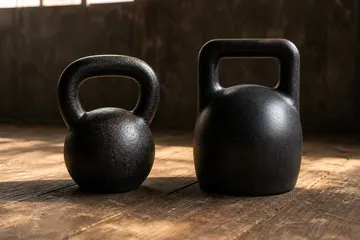 Cast Iron vs. Competition Kettlebells: Which to Buy Compare cast-iron and competition kettlebells by handle, size, comfort, cost, and training style so you can buy the type that fits your practice.
 -
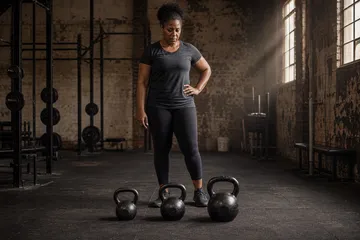 How Many Kettlebells Do You Actually Need? Decide whether your training needs one kettlebell, a few useful weights, or a matched pair—and avoid buying bells that solve no real problem.
 -
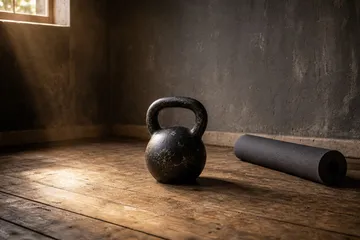 The One-Kettlebell Home Gym Build a practical home training setup around one kettlebell, with movement choices, simple session templates, and ways to progress before buying another bell.
 -
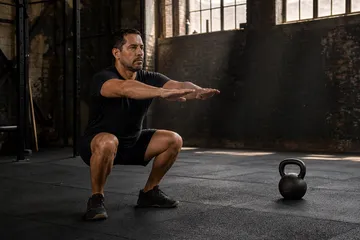 Warming Up for Kettlebell Training Use this short kettlebell warm-up to rehearse the hinge, squat, rack, and overhead positions before your working sets without tiring yourself out.
 -
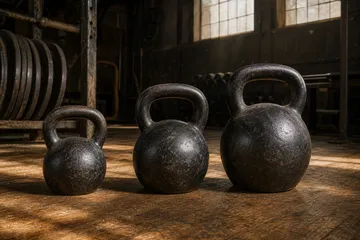 What Is a Pood? The Unit Kettlebells Are Still Sized In Learn what a pood weighs, why 16, 24, and 32 kg kettlebells follow its old pattern, and how to convert poods without treating the numbers as exact.
 -
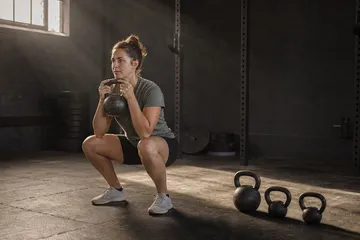 What Size Kettlebell Should You Start With? Choose your first kettlebell by movement and training experience, with practical starting ranges in kilograms and pounds and a simple in-store test.
 -
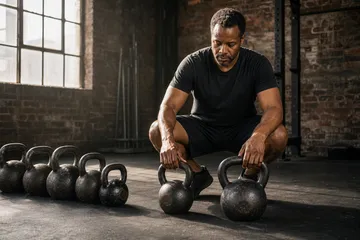 Kettlebell Weight Conversion: kg, lb, and Pood Convert common kettlebell sizes between kilograms, pounds, and poods, with practical tables and rules for reading labels and training plans.