
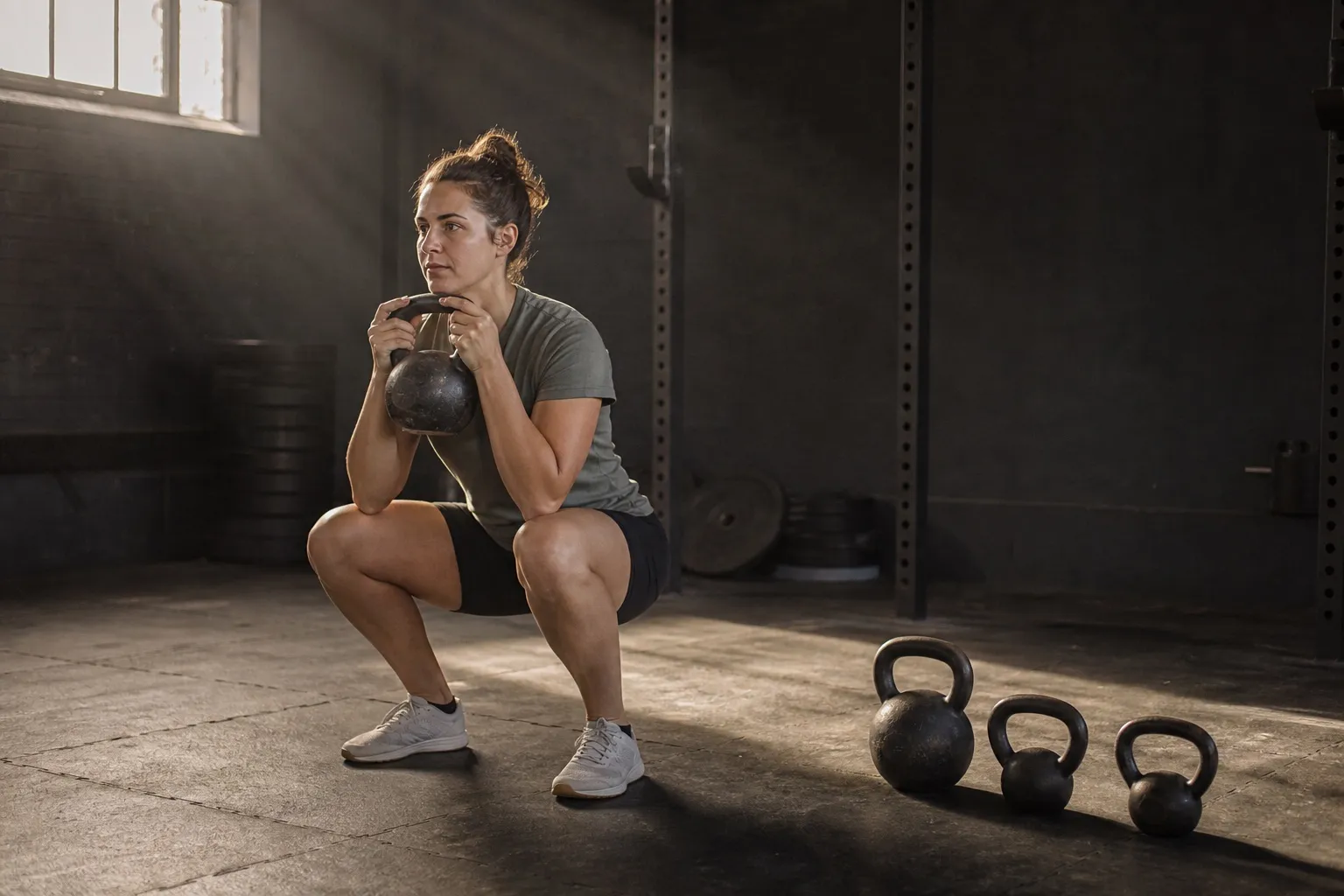
Your first kettlebell should be heavy enough to make swings feel like strength work, but manageable enough that you can learn the press, squat, and get-up without fighting the weight. That is why there is no single correct beginner size. The movement matters as much as your training history.
If you want the short answer:
- For swings, deadlifts, and goblet squats: start your search around 12 kg (26 lb). If you already train with weights, try 16 kg (35 lb). If 12 kg disrupts your position or timing, try 8 kg (18 lb).
- For presses and get-ups: start around 6–8 kg (13–18 lb) if resistance training is new to you, or 8–12 kg (18–26 lb) if you already lift.
- For one bell that must do everything: choose for the most demanding movement you plan to practice, usually the press or get-up. For many beginners, that points to 8 or 12 kg rather than 16 kg.
Treat those numbers as a shortlist, not a verdict. Test the actual bell before buying when you can.
Choose by movement, not by ego
A two-hand swing uses the hips and both hands to move the bell. A one-arm press asks one shoulder and arm to control it overhead. You should expect to use different loads for those jobs.
This creates the central problem with buying one kettlebell: a load that is satisfying for swings may be too much for early overhead practice, while a comfortable press weight can feel underpowered for two-hand swings.
Decide what you will do most often:
| Your main practice | Sensible first weights to try |
|---|---|
| Deadlifts, two-hand swings, goblet squats | 8, 12, and 16 kg (18, 26, and 35 lb) |
| Presses, get-ups, halos, carries | 6, 8, and 12 kg (13, 18, and 26 lb) |
| A mixed routine with one bell | 8 or 12 kg (18 or 26 lb) |
| Hinge work for an experienced strength trainee | 16 or 20 kg (35 or 44 lb) |
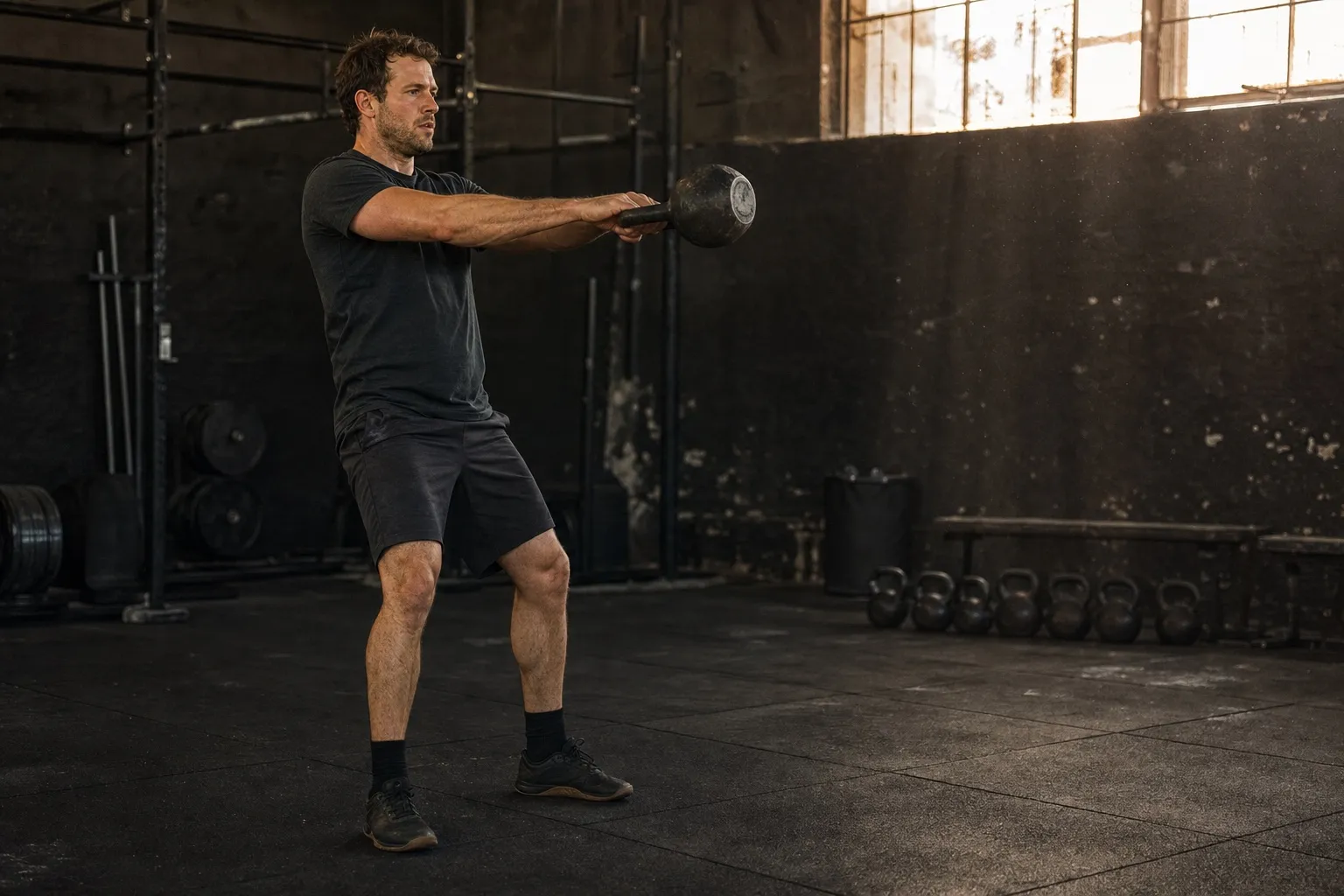
A 24 kg (53 lb) bell can be an appropriate working weight for a strong, experienced lifter. It is rarely the best blind purchase for learning kettlebell technique. If that is where you think you belong, test the exact weight with the movements you intend to train.
Published beginner charts often divide recommendations by sex. That can give you a rough shopping range, but it leaves out more useful facts: your training background, the movement, your proportions, and whether you are learning with instruction. Start from the work you need the bell to do.
Use a five-minute fit test
If a gym, store, or training partner has several bells, compare neighboring sizes. Do not test the heaviest thing you can pick up once. Test the positions you need to repeat.
- Deadlift it for five controlled reps. The bell should leave the floor without your back position changing or the weight pulling you forward.
- Hold it at your chest for five squats. You should be able to keep the bell close and stand each rep without a last-second shift or twist.
- Place it in the rack position for 10 seconds per side. Your wrist should stay straight, with the bell resting against the forearm rather than hanging from a bent wrist.
- Test the hardest planned movement. If you already know how to press, get up, or clean the kettlebell smoothly, perform a few controlled reps on both sides. If you do not know the movement yet, have a qualified coach show you the setup before using it as a purchase test.
- Compare one size lighter. The lighter bell is not automatically the better choice, but the comparison reveals whether the heavier option changes your movement.
The right starting bell gives you room to practice. You should be working, but not improvising a new technique just to finish the rep.
Buying online makes this harder. Look for a useful return policy, or visit a local gym first and handle standard sizes. Ten minutes with real bells can prevent an expensive guess.
What 8, 12, and 16 kg actually mean
Kettlebells commonly move in 4 kg jumps. That makes the difference between sizes larger than it looks on a product page.
- 8 kg is about 18 lb. It is a practical technique bell for presses and get-ups, though many trainees will soon want more weight for swings and squats.
- 12 kg is about 26 lb. It is the middle ground: substantial enough for basic hinge work and still accessible for many one-arm movements.
- 16 kg is about 35 lb. It is roughly one pood, the old unit still associated with traditional kettlebell sizing. It is a common hinge-work starting point for people who already have a strength base, but it can be a steep first overhead load.
Some makers also offer 6, 10, and 14 kg bells. Those 2 kg steps are useful. There is no reason to force a 4 kg jump when the size between them fits you better.
One fixed bell or an adjustable bell?
A fixed cast-iron bell is simple, durable, and ready the moment you pick it up. An adjustable bell costs more upfront but solves the mismatch between heavy two-hand work and lighter one-arm practice. It also lets you progress in smaller steps without filling a room with iron.
An adjustable model is most useful when:
- you truly have room for only one bell;
- more than one person will train with it;
- your routine mixes swings with presses or get-ups; or
- you want small load increases rather than 4 kg jumps.
Check that its locking mechanism is secure and that the bell feels comfortable in the rack position. Adjustment should happen between exercises, never during a set.
If you prefer fixed bells, the first one does not need to cover every future workout. Build around what it does well. A one-kettlebell home gym is more capable than it sounds, especially when you adjust reps, sets, tempo, and rest instead of treating weight as the only variable.
Weight is only half the purchase
Two kettlebells marked 12 kg can feel very different. Before buying, inspect:
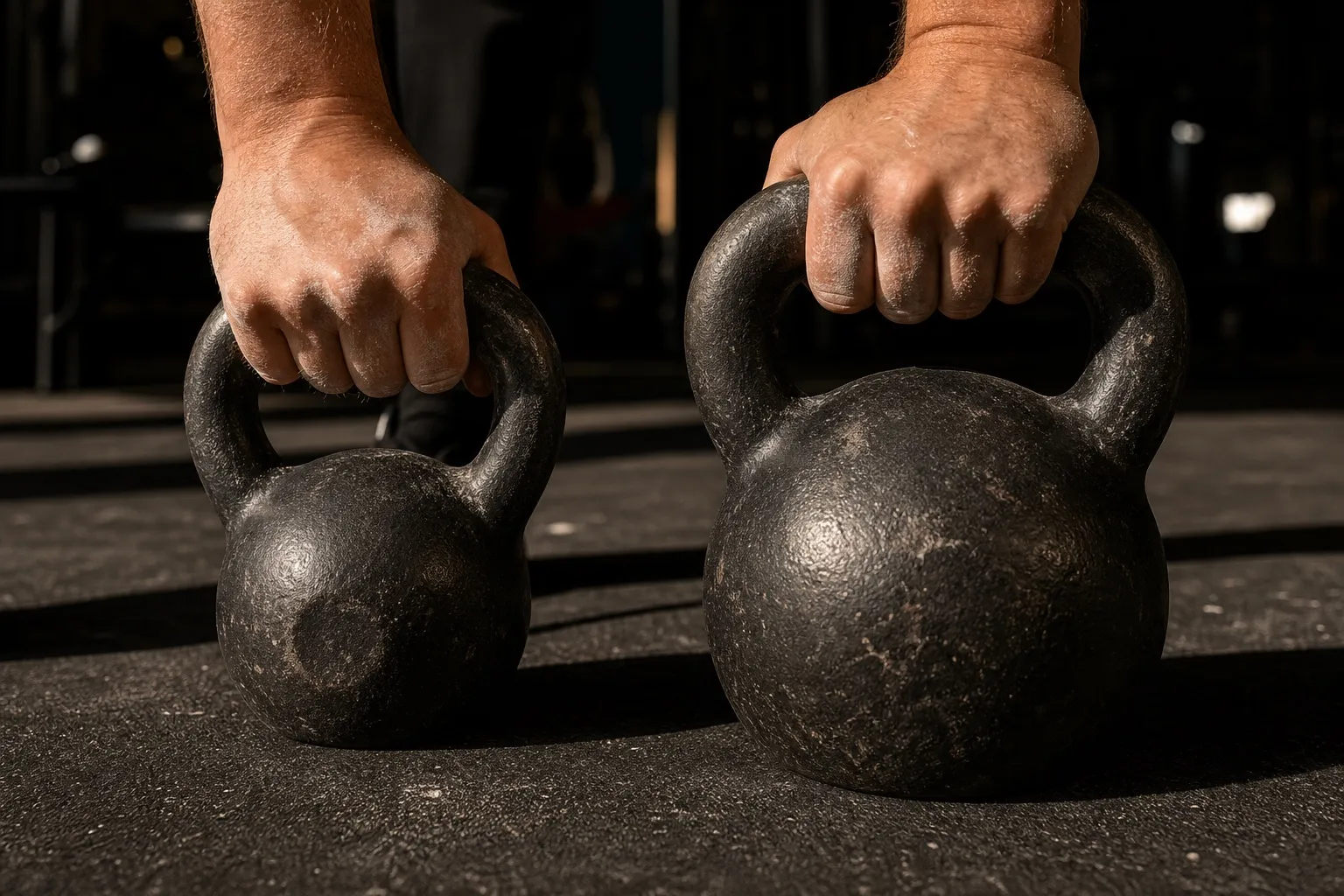
- The handle: both hands should fit for two-hand swings, with no sharp seam digging into your fingers.
- The window: there should be enough room between handle and bell for a neutral wrist in the rack position.
- The finish: it should offer grip without a slick coating or rough ridges.
- The base: a flat base matters for stable storage and floor-based movements.
- The dimensions: traditional cast-iron bells usually grow as weight increases; competition-style bells keep the same outer size across weights, which changes how they sit against your arm and how consistent they feel between sizes.
A comfortable 12 kg bell is a better first tool than an awkward 16 kg bell you avoid using.
Plan for the second bell, but earn the decision
Your first bell is a starting point, not a lifetime commitment. After several weeks of consistent practice, a comparable workout history will tell you what is missing. The guide to how many kettlebells you actually need turns those repeated limitations into a practical second-bell decision.
If your swings stay crisp across every set and the load no longer asks much of you, a heavier bell may be the useful next purchase. If swings are challenging but presses remain out of reach, add a lighter bell instead. Track the exercise, load, reps, sets, and rest time so you are responding to a pattern rather than one unusually good day.
Pood lets you register the bells you own and log them in kilograms, pounds, or poods. Units are free and switchable, so the number stamped on your bell never dictates how you have to track it.
Start with the movement. Try two neighboring weights. Buy the bell that lets you practice clean repetitions today while leaving somewhere to progress tomorrow.