
A kettlebell warm-up should prepare you for the session you are about to do. It does not need to become a second workout.
For most sessions, six to ten minutes is enough. Start with easy whole-body movement, rehearse the positions you will use, then perform one or two lighter versions of the first working set. You should finish feeling more coordinated, not tired.
If you want one default, use this eight-minute sequence:
- Move continuously for two minutes.
- Practice unloaded hinges and squats for two minutes.
- Use a light kettlebell for two minutes.
- Ramp toward the first working set for two minutes.
The details change with the workout. A swing session needs more hinge rehearsal. A press session needs time in the rack and overhead positions. Keep the structure and change the emphasis.
What a warm-up needs to accomplish
A useful warm-up has three jobs.
First, it moves you from rest into training. Walking, marching in place, or an easy cycle raises your effort gradually without asking for much coordination.
Second, it rehearses the shapes in the session. If you will swing, practice the hinge. If you will squat, squat without load. If you will press, spend time in the rack position before sending weight overhead.
Third, it gives you information. The first few repetitions tell you how the movement feels today. You may be ready for the planned bell, or you may need another light set before you begin.
That is enough. You do not need a long catalog of mobility drills before every workout. You also do not need to force a fixed ritual when the day’s training uses different movements.
An eight-minute kettlebell warm-up
Set a timer if you tend to let warm-ups drift. The time limits below are guides, not intervals you have to race.
Minutes 0–2: move
Walk briskly, march in place, climb stairs at an easy pace, or pedal a stationary bike if you have one. Move your arms naturally. The goal is simply to stop feeling like you just came in from the car or stood up from a desk.
Keep the effort conversational. This is preparation, not conditioning.
Minutes 2–4: rehearse without weight
Perform two easy rounds of:
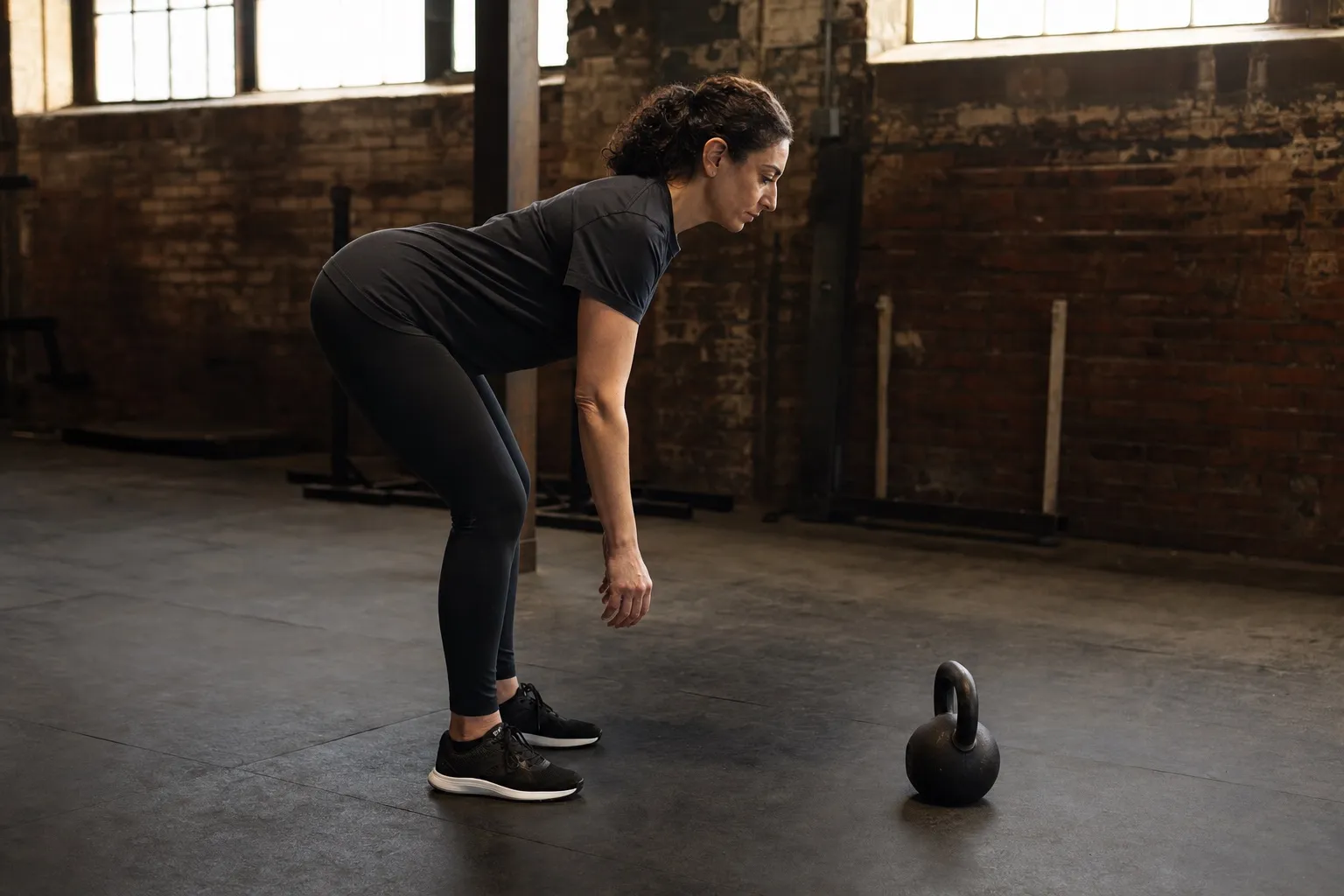
- 8 bodyweight hinges;
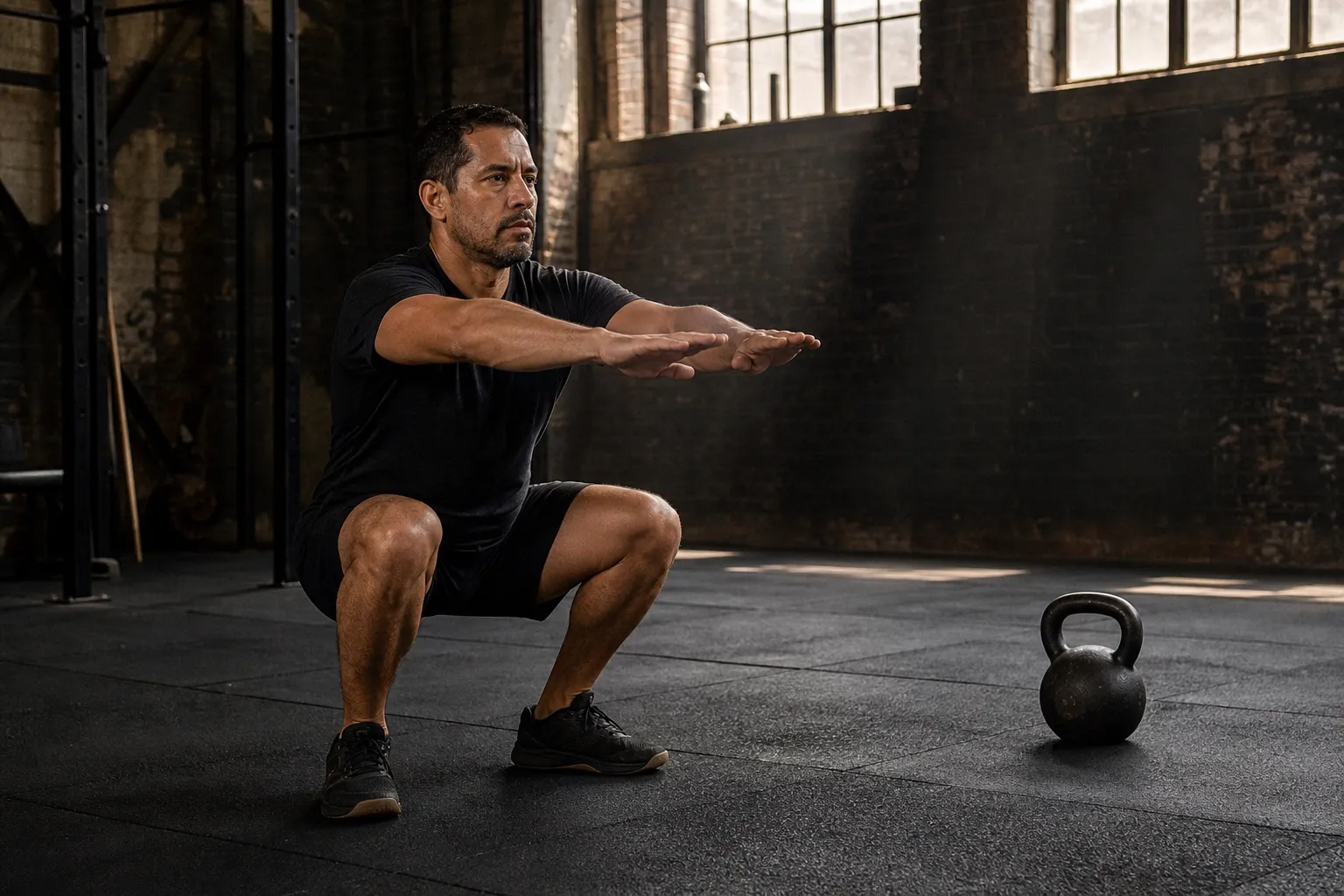
- 5 controlled bodyweight squats;
- 5 slow arm circles in each direction; and
- 3 relaxed overhead reaches per side.
For the hinge, send your hips back while keeping your feet planted. For the squat, use the depth you can control without shifting or rushing. Nothing here should be forced. You are checking the positions that will soon carry load.
Minutes 4–6: add a light bell
Choose a bell lighter than your planned working weight when you have one. Perform:
- 5 kettlebell deadlifts;
- 3 goblet squats; and
- 3 halos in each direction with a weight you can guide smoothly.
You do not have to use every drill. Keep the ones that resemble the session. Before a swing workout, deadlifts matter more than halos. Before a press workout, a light rack hold and a few controlled presses may be more useful than extra squats.
If you own only one kettlebell, keep this part easy by using fewer repetitions and a slow setup. You can also continue with unloaded rehearsal until you are ready for the bell. The one-kettlebell home gym does not require a separate collection of warm-up weights.
Minutes 6–8: ramp to the first work set
Perform a small version of the first set you plan to log.
- If the session starts with sets of 10 swings, perform 5 swings and stop.
- If it starts with 5 goblet squats, perform 2 or 3.
- If it starts with presses, perform 1 or 2 controlled repetitions per side with a lighter bell, then test the working bell.
- If it starts with get-ups, rehearse one unloaded repetition or a familiar segment on each side before adding weight.
Use only movements you already know how to perform. A warm-up is a poor time to rush through a new skill.
Rest briefly, then begin. If the ramp-up set feels uncoordinated, repeat it or make the load change you would want recorded in the training log. The planned number is less important than a controlled first work set.
Match the warm-up to the session
The eight-minute sequence is a starting point. Once you know the day’s main movement, you can make it more specific.
Before swings
Spend most of the warm-up on the hinge and the path from the floor. Try 10 unloaded hinges, 5 light deadlifts, then 5 controlled swings. Rest long enough to reset your grip and breathing before the first full set. If the working movement is not yet familiar, review the swing setup and timing before adding speed.
Do not add dozens of light swings merely because they are light. They still count as work and can quietly change a planned session.
Before presses or other overhead work
Use a bell you can control easily. Try 3 light halos in each direction, a 10-second rack hold per side, and 2 or 3 light presses per side. Then perform 1 repetition with the planned working bell. The kettlebell press guide covers the rack, press path, and lockout those repetitions should rehearse.
The rack hold tells you whether the bell is sitting where you expect. The single heavier repetition tells you more than another long set with the light bell.
Before squats and deadlifts
Move from unloaded to loaded in small steps: 5 bodyweight squats or hinges, 5 light deadlifts, then 3 light goblet squats. If the session uses a heavier bell, perform 1 to 3 repetitions with it before starting the first full set.
Before get-ups
Rehearse the movement without load first. Move slowly through one repetition per side, or pause at the portions you want to organize. If that feels familiar, repeat with a light bell before using the working weight. Use the step-by-step get-up route when you need to review the checkpoints before loading them.
Get-ups take time, so the rehearsal can be the whole specific warm-up. There is no need to bolt a separate circuit onto it.
How light should the warm-up bell be?
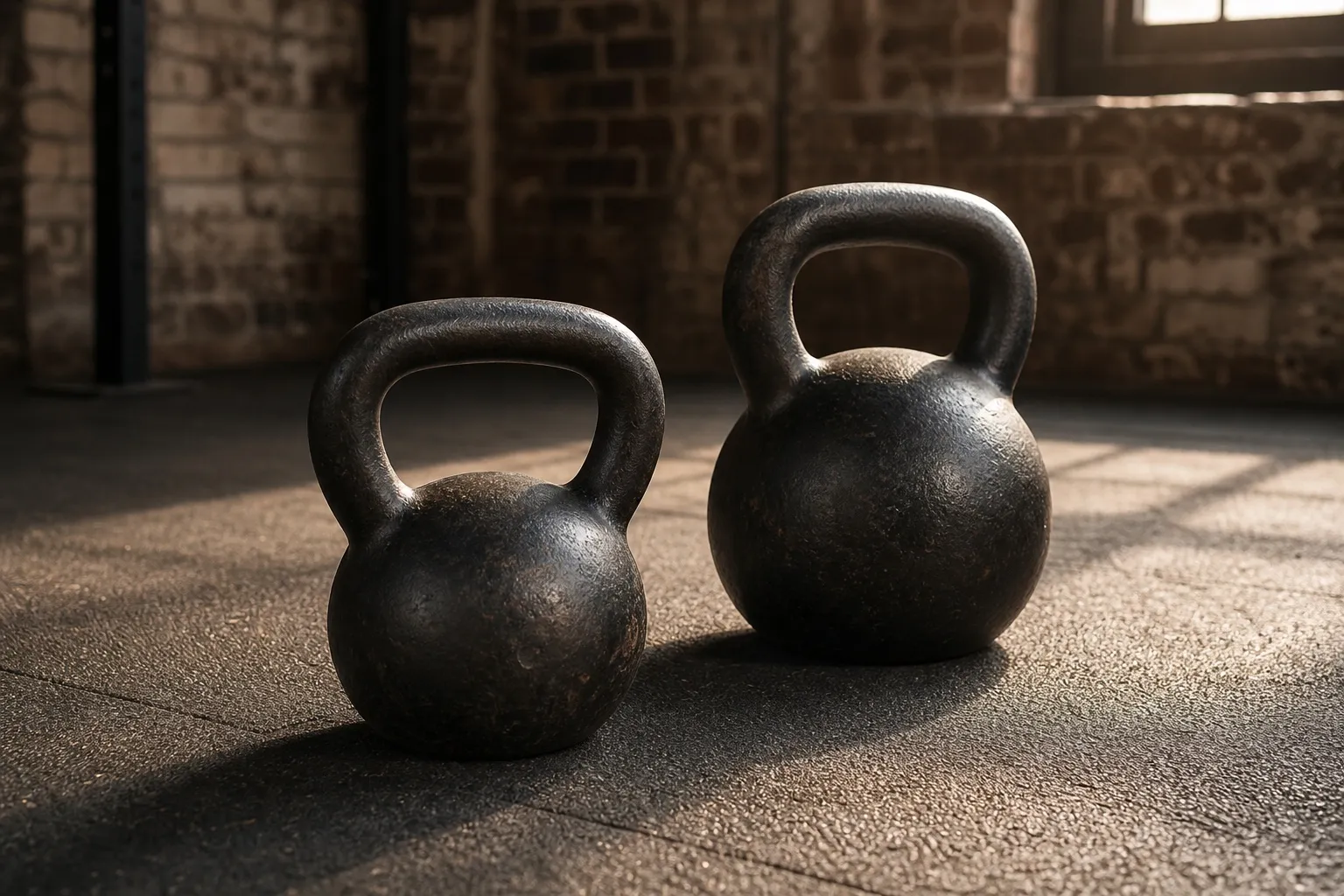
Use the lightest bell that lets you rehearse the movement naturally. That might be 4 kg below your working bell, half the working load, or simply the lighter bell you already own. The exact percentage matters less than the difference in effort.
A useful warm-up bell lets you stop every repetition where you intended. If you have to brace as hard as you will during the work sets, it is not serving as a light step.
This is one reason a lighter kettlebell can remain useful after you progress. It can support technique practice, warm-up sets, and overhead work while a heavier bell takes over swings and deadlifts. If you are deciding whether another weight would add a real capability, use the guide to how many kettlebells you actually need.
What to leave out
A warm-up becomes less useful when it competes with the training.
Avoid:
- high-repetition circuits that make your grip or breathing the limiting factor;
- stretches you have to force into an uncomfortable range;
- drills unrelated to anything in the session;
- jumping directly from no load to a demanding overhead weight; and
- treating persistent or sharp pain as something to push through until it disappears.
If a movement hurts rather than merely feels stiff or unfamiliar, stop loading it. A warm-up can help you assess readiness, but it cannot diagnose a problem.
Know when you are ready
You are probably ready to begin when your breathing is slightly elevated, the main positions feel familiar, and the ramp-up set looks like the work you intend to perform. You should not need to sit down before the workout starts.
The routine can be shorter when you have already been active. It can be longer after a cold walk to the garage or a day spent sitting. Keep the sequence responsive rather than ceremonial.
Then record the work that matters. Pood lets you register the light and heavy bells you actually own and log in kilograms, pounds, or poods. You can include warm-up sets when they help explain the session or begin the log with the first working set. Consistency matters more than either choice.
Move first. Rehearse the pattern. Add load in a small step. Then train.